
STONE WORK
This is boundary walls, entrance features and facades. The stone is shaped and set by hand on site — not pre-cut, not modular. That slower method is what gives the finished work its weight and irregularity. No two lengths of wall are identical, because no two stones are.
It covers solid stone construction and cladding. The process is the same either way: stone is chosen for the site, then fitted piece by piece so the wall reads as one surface rather than a repeating panel. Corners, returns, piers and openings are worked into that surface as you go, not added later as separate details.
Stone is selected for how it weathers, how it sits against the ground, and how it looks once it is on the wall. In the Northern Rivers that means material that can take humidity, heavy rain and coastal air without the ongoing upkeep a rendered or manufactured finish needs. Left alone, the colour deepens and the face settles instead of looking worn. That is the point of using it here.
A finished wall or entrance should look like it belongs to the building and the ground around it — settled, permanent, and decided as one piece of work rather than a surface applied over the top.
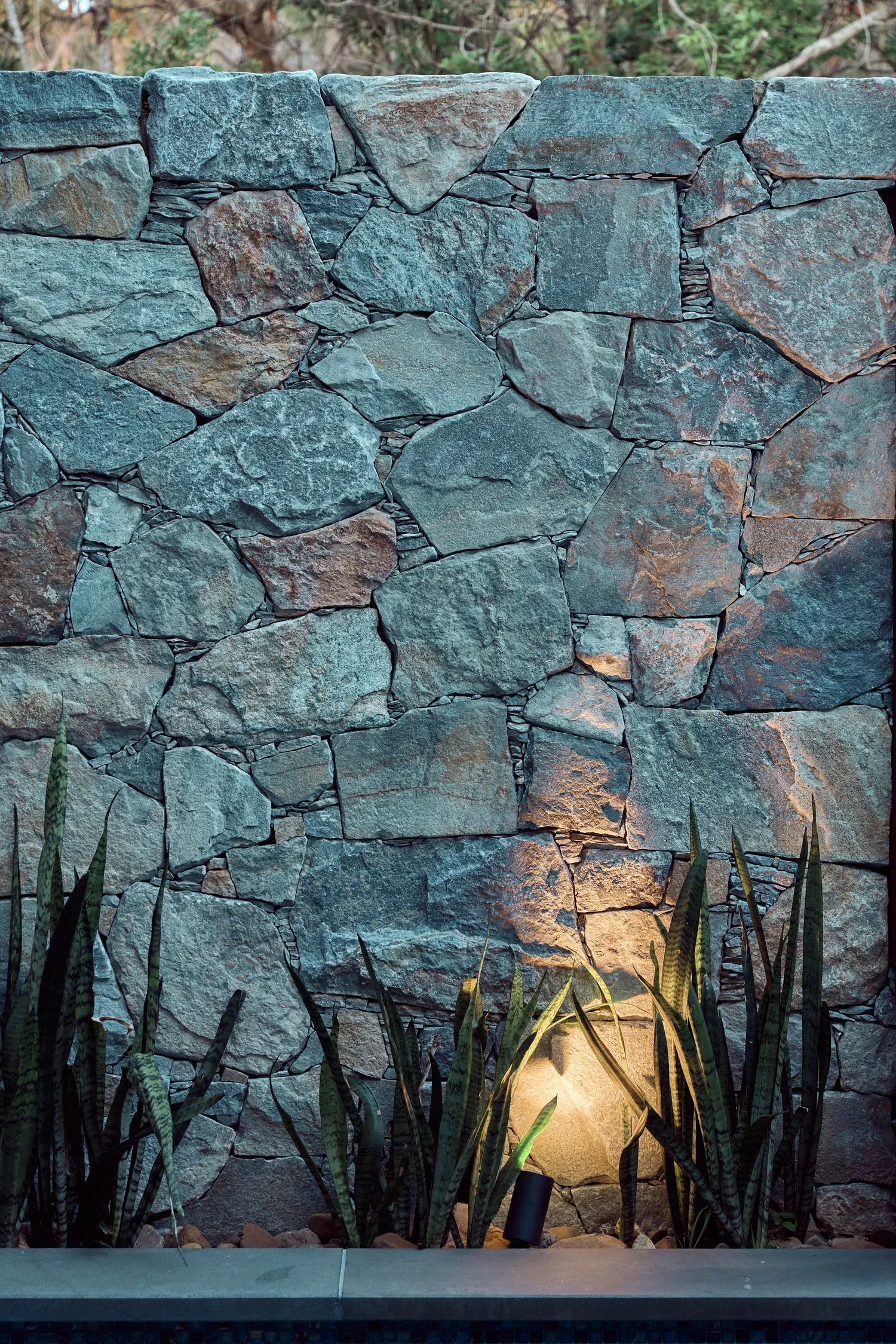
Stone Entrance Garden — Coopers Shoot
A stone facade carried from the exterior through into the interior, paired with a heritage cobblestone path.
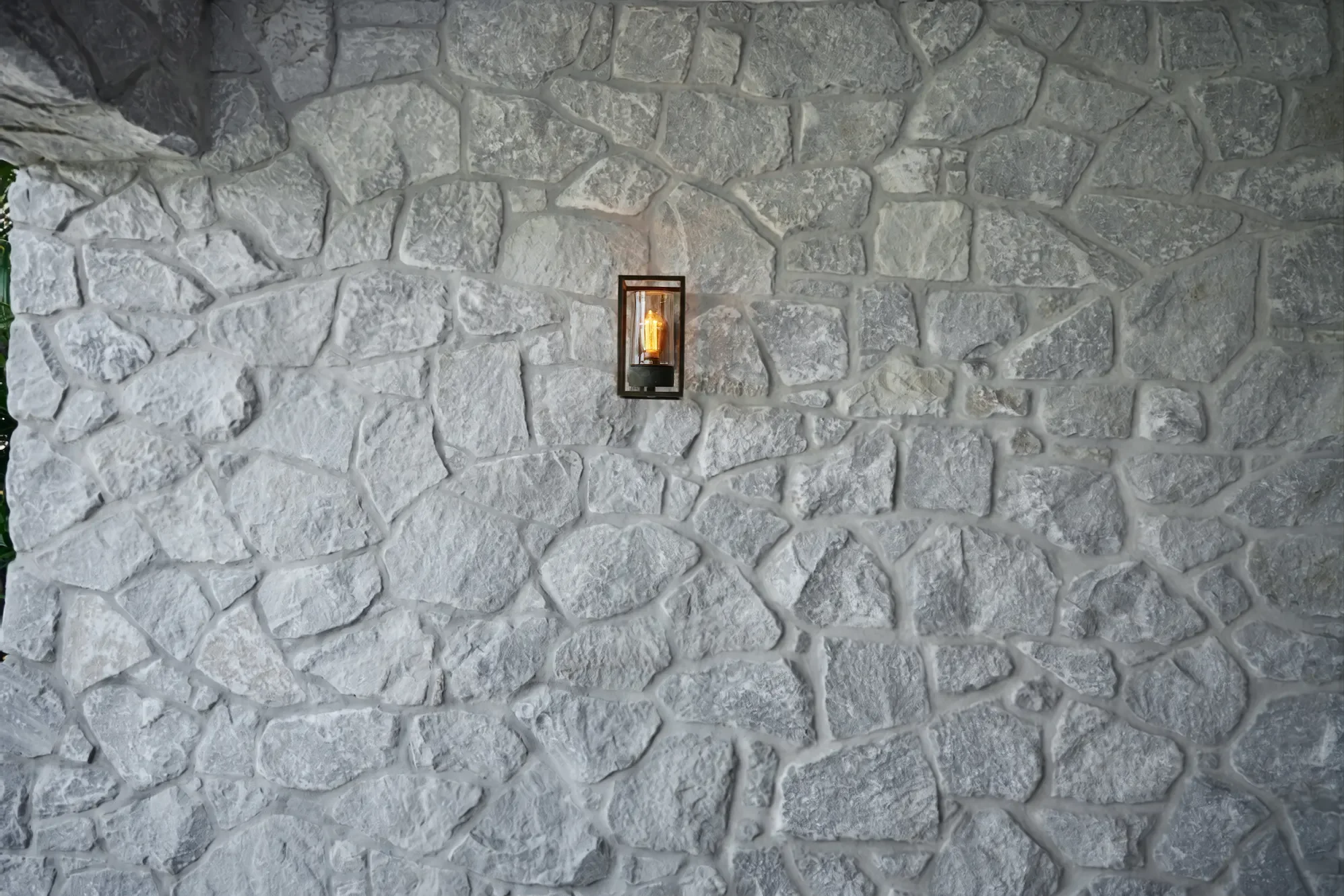
Stone Boundary Wall — Suffolk Park
A limestone boundary wall with bluestone capping, built to mark the property line without reading as a barrier.
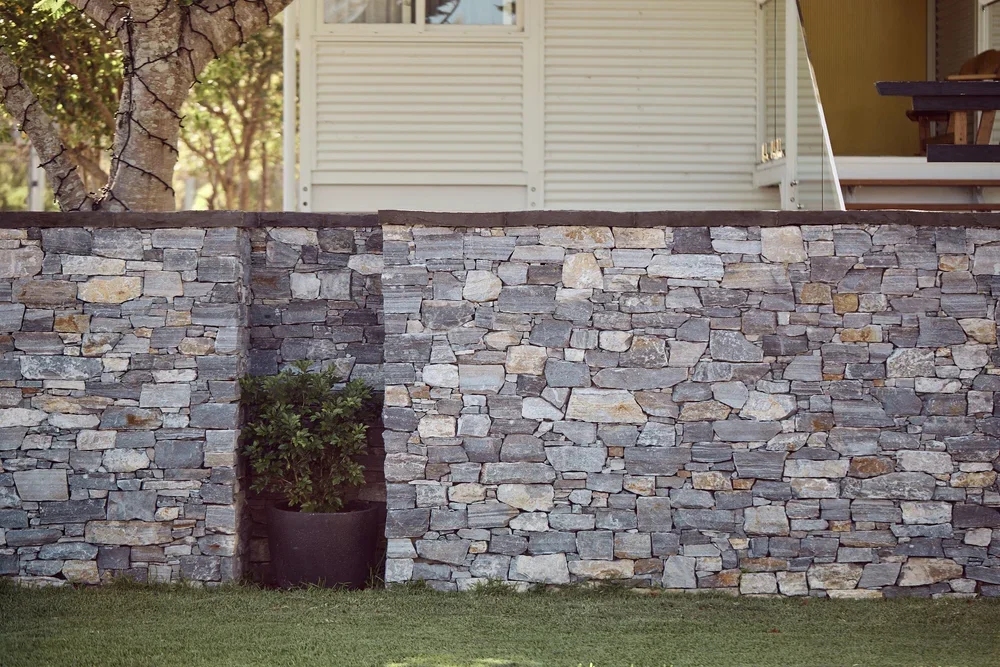
Sandstone Feature Walls — Woodburn
Sandstone feature and retaining walls, built to hold a grade change on site as well as stand as a feature in their own right.
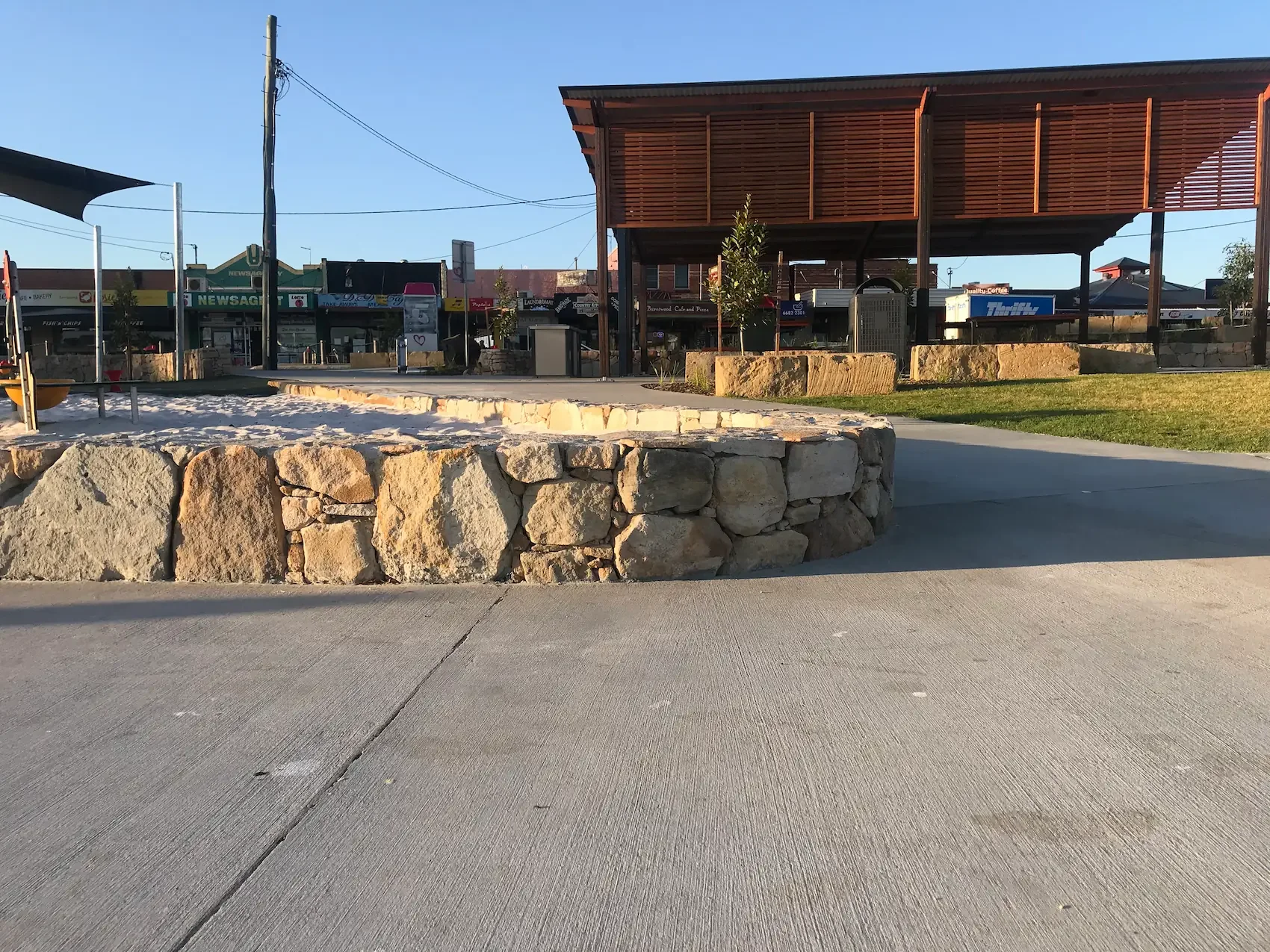
Design and Documentation
Work of this scale usually starts on paper. Site consultation, concept design and construction documentation come first, so the wall is resolved before the first piece is set.
Part of our Hardscapes work →
FAQ
-
Solid construction is structural — the stone itself forms the wall. Cladding is a stone face fitted over a structural backing. Both are worked by hand, piece by piece
-
Yes. Several of our stone projects also manage a grade change on site, so the same wall is doing structural work and forming the finished face. That is often the cleanest way to handle a slope without stacking two separate systems against each other.